
Sarasota & North Port: What to Know Before the Tow Truck Arrives
More electric vehicles are on the road in Sarasota, North Port, and across Southwest Florida every year, from commuter sedans and rideshare cars to delivery vans and local fleets. When one of them breaks down, runs out of charge, or is in a collision, the tow matters more than most drivers realize. Towing an EV the wrong way can cause expensive damage that a gas-powered car would never suffer.
At Talon Towing, we tow Teslas and other EVs every day from our Sarasota and North Port terminals, and we want every EV driver and fleet manager to know what safe electric vehicle towing looks like, what to tell the dispatcher, and what questions to ask before you hand over your keys. Here is the short version: use a flatbed, check the owner’s manual, and give your tow provider as much information as you can.
How Is Electric Vehicle Towing Different From a Regular Car?
A gas or diesel car can usually be shifted into neutral so its wheels roll freely. An electric vehicle is built differently, and those differences change how it has to be moved:
Can the Wrong Tow Ruin an EV?
Yes. The most common mistake is towing an EV with its drive wheels on the ground, either with a tow dolly, a wheel-lift, or a hook-and-chain rig. Even a short distance at low speed can damage the motor or drivetrain, and repairs on an electric powertrain can be costly. Using the wrong lift points or dragging a low front end up a steep ramp can also crack bumpers, shields, and underbody panels, or damage the battery pack housing.
Why Electric Vehicle Towing Needs a Flatbed
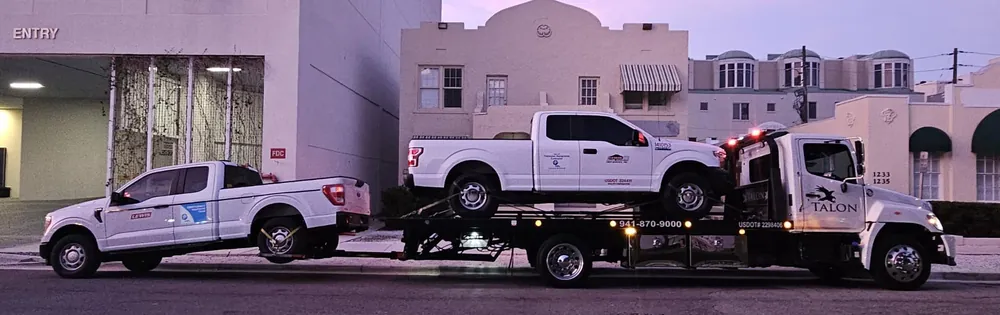
Flatbed towing carries the whole vehicle on the bed of the truck, so no wheel ever touches the road. For an EV, that solves nearly every problem at once. The motor and regenerative braking system are never back-driven, the weight is supported evenly, and a slide-back bed with a shallow loading angle protects low bumpers and the battery pack. It is also the only safe option for all-wheel-drive EVs, which cannot be towed with any wheels on the ground.
Flatbed towing is also the better choice when an EV is stuck in a garage or parking structure, sitting in a ditch, or has wheels that will not turn. A skilled operator has more options with a flatbed and winch than with a dolly.
Flatbed vs. Dolly: Which Is Better for an EV?
When in doubt, ask for a flatbed. It is the answer most EV manufacturers point to, and the one that protects you from a warranty or insurance headache later.
Towing a Tesla or Another Popular EV
The same principles apply whether you drive a Tesla, a Ford Mustang Mach-E, a Chevrolet Bolt, a Hyundai Ioniq, a Rivian, or an electric delivery van. Each manufacturer publishes its own towing and transport instructions, and they are not identical. Tesla vehicles, for example, offer a Transport Mode in the touchscreen that releases the parking brake so the car can roll onto a flatbed. Other brands have their own procedures.
That is why the make, model, and year matter when you call Talon Towing’s dispatch. If you can, find the towing section of your owner’s manual or in-car manual before the truck arrives, and let the operator know where to look.
How to Prepare for an EV Tow
A few minutes of preparation protects both you and your vehicle. Before the tow truck arrives:
How Much Does Electric Vehicle Towing Cost?
There is no single price. The cost of electric vehicle towing depends on several factors, and a good provider will walk you through them before the truck rolls:
Before you agree, ask for a quote that includes hookup, mileage, and any additional fees, and confirm it is for a flatbed. Also check your coverage. Your auto insurance, an automaker’s roadside program, or a motor club membership may already cover some or all of an EV tow.
How to Choose an EV Towing Service
Whether you are booking a scheduled long-distance tow or need emergency help right now, the questions are the same. Use this checklist to compare towing and roadside assistance providers, and look at customer reviews to see how a company handles problems as well as how it handles routine calls.
Florida Drivers: Flooded and Storm-Damaged EVs
Storm season adds a risk that drivers in many states never face. An EV that has been in floodwater, especially salt water, can have battery and electrical damage that is not obvious right away. If your EV has been submerged or driven through deep water, avoid charging it until it has been inspected, and tell the tow operator before they arrive.
If it is safe to do so, keep the vehicle away from buildings and other cars, and let your insurance company know. Talon Towing’s recovery crews handle storm response around the clock across Sarasota, North Port, and the surrounding counties.
A Note for EV Fleet Managers
If your fleet includes electric vans, trucks, or passenger vehicles, build EV towing into your breakdown plan now rather than during a roadside emergency. Share each vehicle’s towing instructions with your drivers, keep a list of drive types (rear, front, all-wheel), and set up a local towing and roadside assistance provider that can respond around the clock wherever your routes take you. Talon Towing supports local fleets with light-, medium-, and heavy-duty towing, recovery, and roadside assistance from two terminals. A single wrong tow can sideline a vehicle for weeks and cost far more than the tow itself.
Electric Vehicle Towing FAQs
Can you ruin an EV with the wrong kind of towing?
Yes. Towing an EV with its drive wheels on the ground can force the electric motor to spin and damage the drivetrain, and an improper hookup can damage the battery pack or underbody. A flatbed is the safest method for nearly every electric vehicle.
Why does electric vehicle towing need a flatbed truck?
A flatbed lifts all four wheels off the road. That protects the motor and regenerative braking system from being back-driven, protects low-slung battery packs and bumpers, and works for all-wheel-drive EVs that cannot be towed with any wheels on the ground.
What is better for EV towing, a flatbed or a dolly?
A flatbed is better for almost every EV. A dolly or wheel-lift tow leaves two wheels on the pavement, which is only acceptable when the owner’s manual specifically allows it for that model. All-wheel-drive EVs should never be towed that way.
How much does electric vehicle towing cost?
Cost depends on distance, time of day, vehicle weight and condition, and where the vehicle is located. Many providers charge a base hookup fee plus a per-mile rate. Ask for a quote that includes hookup, mileage, and any additional fees, and confirm the truck will be a flatbed.
What should I do if my EV breaks down or runs out of charge?
Pull over safely, turn on your hazard lights, and call a towing provider. Tell them the make, model, and drive type, and whether there was a collision or a battery warning. Talon Towing provides 24/7 emergency towing and roadside assistance across Sarasota, North Port, and nearby communities at (941) 870-9000.
Does Talon Towing tow Teslas and other electric vehicles?
Yes. Talon Towing tows Teslas and other EVs as part of its light- and medium-duty towing service from its Sarasota and North Port terminals. Call 24/7 dispatch at (941) 870-9000 and tell the dispatcher the make, model, and drive type.
Get the Right Tow the First Time
Electric vehicles are changing how we drive, and they are changing how they need to be towed. Keep the basics in mind: flatbed, correct information, and a provider you can reach any time of day. If you do, an EV breakdown is a manageable inconvenience instead of an expensive mistake.
Talon Towing has served Sarasota, North Port, and the surrounding area since 2012, with terminals at 5989 Clark Center Ave in Sarasota and 5085 Pan American Blvd in North Port. One call to dispatch reaches both. Save the number in your phone now, before you need it.
Need an EV Tow in Sarasota or North Port?
From light-duty towing to heavy-duty recovery and roadside assistance, Talon Towing is ready around the clock. One call reaches both local terminals.
Talon Towing | A Guardian Fleet Services® Company